Building and Managing Urban Transport Networks
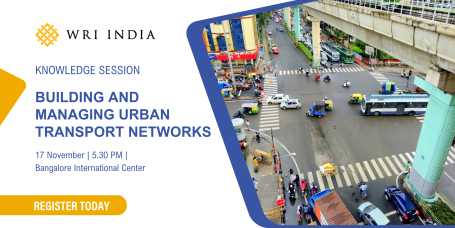
Bengaluru’s emergence as India’s tech and innovation hub has been accompanied by mounting mobility pressure: growing private-vehicle ownership, rising congestion and travel times, and an infrastructure system struggling to keep pace.
Mobility science consistently advocates for increasing the modal share of public transport, walking, and cycling to improve urban quality of life. But what is this science based on? What are the key concepts that a city must adhere to while planning for mobility and infrastructure?
This technical session will introduce core transport-planning concepts, including network effects, corridor capacity, trip generation and induced demand, and situate them in the Bengaluru context, where the choices made today will shape accessibility, equity and sustainability for millions.
By bringing together experts, planners and informed citizens, this session aims to launch a Dialogue Series that moves beyond case studies to practical frameworks and measurable outcomes: enabling a shared understanding of the science behind mobility, building a “people-first” mindset in transport decisions, and equipping attendees to engage more deeply with Bengaluru’s transport future.
| 5.15 pm – 5.45 pm | Registration | |
| 5.45 pm – 6.00 pm | Welcome Remarks | Opening by host; introduction to the initiative |
| 6.00 pm – 6.30 pm | Presentation: Understanding Urban Transport Networks | A 30-minute presentation introducing key transport planning concepts |
| 6.30 pm – 7.30 pm | Panel Discussion | Experts discuss on how scientific planning can transform Bengaluru’s mobility scenario |
| 7.30 pm – 7.45 pm | Audience Q&A followed by closing remarks | |