


Addressing Humid Heat Inside Surat’s Textile MSMEs
Halfway through his 12-hour shift, Pranob* is drenched in sweat. The stenter machine he operates at a small textile processing facility in Surat, Gujarat, blasts hot air throughout the day as it stretches and dries fabric. “The fans blow hot air, and the sweat does not dry even during breaks,” he says. Despite two scheduled breaks, there is no respite from the heat. Pranob’s experience reflects the daily reality faced by many workers in Surat’s micro, small and medium enterprise (MSME) textile units.
Surat’s Heat and Humidity Crisis
Surat has over 400 dyeing and printing units, producing nearly 40% of India’s synthetic fabric. Its proximity to the Tapi River and Arabian Sea offers climatic comfort and many economic advantages. These advantages appeal to migrants who constitute about 42% of the city’s population.
However, between March and June temperatures soar, reaching 37 degrees to 41 degrees Celsius. Relative humidity can range from 35% to 80%, especially during the pre-monsoon weeks. The India Meteorological Department (IMD) defines a heatwave in coastal cities like Surat at 37°C, lower than the 40°C threshold for inland areas.
High humidity makes it harder for sweat to evaporate, reducing the body’s ability to cool itself and increasing the risk of heat-related illnesses. Moreover, research shows that at 37 degrees Celsius, even 60% relative humidity can reduce productive work capacity by half.
For workers in poorly ventilated spaces, these conditions pose severe occupational risks. Prolonged exposure leads to fatigue, dehydration, and loss of fluids and salts. High humidity worsens skin and respiratory issues, particularly for those handling chemicals in textile processing units. At a recent heat stress workshop, conducted by WRI India, many workers reported fainting or dizziness in late afternoons, citing poor ventilation, inadequate exhausts and steam buildup as major contributors.
Additionally, many units shared that during the summer months, worker absenteeism can rise to 35%. Consequently, the remaining staff faces increased workloads, notes Shriram*, who heads human resources in a textile processing MSME.
Inside the Processing Units
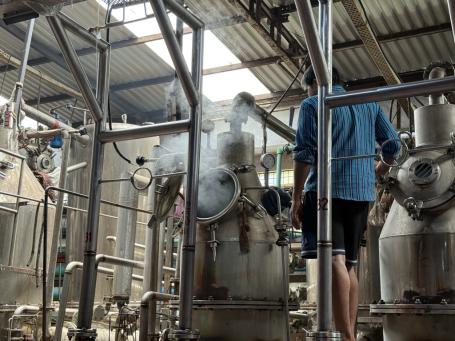
Textile processing relies on heat-intensive machinery — jet dyeing machines, drum washers, stenters, printing and loop — operating at temperatures ranging from 40 degrees to 200 degrees Celsius. According to the author's preliminary measurements in four textile processing MSMEs in Surat in June 2025, indoor ambient temperature fluctuated between 26 degrees and 40 degrees Celsius, with humidity levels varying from 30% to 99%. Yet, buildings that house these operations are typically constructed with heat-retaining materials and lack proper ventilation, trapping heat throughout the day.
Over time, many units have expanded machinery capacity without upgrading ventilation systems. Mezzanine floors, for example, reduce ceiling height and restrict airflow, while poorly placed exhaust fans and absent roof vents create zones with minimal air circulation. Adding to the discomfort, steam pipelines and machines often lack proper insulation, leading to steam leaks, directly impacting both worker well-being and enterprise efficiency.
In the printing sections, conditions can be especially stifling. A combination of chemical fumes, strong odours and trapped heat creates suffocating conditions. Workers — particularly older individuals and women wearing layered clothing like sarees — are more vulnerable to heat stress.
Organizations like the Indian Society of Heating, Refrigerating and Air Conditioning Engineers (ISHRAE) recommend maintaining indoor temperatures (dry bulb) up to 27°C and relative humidity below 60%, along with specific air changes per hour to ensure effective ventilation. However, these standards are primarily designed for formal commercial or office environments and are seldom implemented in smaller industrial settings, where awareness, feasibility and adherence remain a significant challenge.
Watch Now: Is it Too Hot to Work in Surat's Textile MSMEs?
Inside a textile MSME in Surat, Gujarat, workers share their experiences of indoor heat stress.
Moving Beyond Make-Shift Solutions
While MSME owners have tried adding more fans, installing bigger exhausts, and redirecting steam and fumes, these measures do not provide long-term solutions. Sahil*, an MSME owner in Surat, highlighted that they are willing to invest but need clear guidance.
Existing City Heat Action Plans are broad and primarily focus on outdoor heat and individual protections. They do not distinguish between industrial zones and residential areas, nor address worker or productivity losses caused by heat. Industry-specific guidelines for managing indoor occupational heat could help bridge this gap and support effective interventions.
How can MSMEs adopt practical, tailored interventions?
To effectively tackle indoor heat stress, MSMEs need a range of practical, workplace-specific interventions anchored in awareness, infrastructure improvements and policy frameworks.
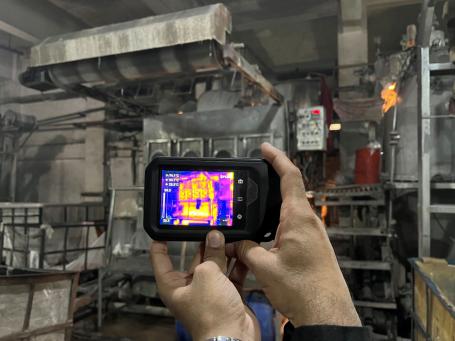
Monitoring indoor heat: MSMEs can start by regularly monitoring workplace temperatures to identify hot spots and poor airflow. Using simple, low-cost tools like handheld hygrometers, staff can record weekly heat and humidity levels. This data can help MSMEs understand when and where heat becomes a problem. Internet of Things (IoT) sensors can also be used for real-time monitoring, but this would require more investment.
Mandating heat mitigation in workplace safety regulations: The Occupational Safety, Health and Working Conditions Code (OSHWC), 2020, mandates safeguards like an 8-hour workday, 48-hour work week, 30-minute rest breaks after five hours, health and safety committees, and medical check-ups in hazardous industries. It also requires employers to maintain temperature, ventilation and protect workers from harmful exposures such as dust and fumes.
While non-compliance with these provisions can make the employers liable to penalties, these are seldom enforced. Units are often not even aware about these provisions. Adding specific benchmarks for indoor thermal comfort and ventilation can help improve awareness and compliance. Embedding these standards into licensing and inspections can elevate occupational heat management from a recommendation to a compliance requirement.
Upgrading infrastructure for climate resilience: A combination of active and passive ventilation solutions can significantly improve working conditions. Stack ventilation, which uses vertical shafts or raised vents to mechanically expel hot air and draw in cooler air with an evaporative cooling system, is an effective example. Additionally, by insulating heat-emitting machinery, optimizing duct designs and reorganizing workspace layouts, MSME units can enhance natural airflow and reduce heat accumulation.
Offering financial support for cooling interventions: MSMEs need support to implement cooling interventions. While there are MSME schemes to install more efficient equipment for improved productivity, dedicated schemes for installing cooling equipment are lacking despite their impact on worker productivity. Banks and financial institutions like Small Industries Development Bank of India (SIDBI) could consider introducing a dedicated loan product for this purpose, with further incentives for solar-based interventions.
Raising awareness and building capacity among employers and workers: Employers need clear, practical information on the health impacts of heat stress, productivity losses and the economic benefits of low-cost cooling interventions. Workers must be educated to recognize early signs of heat-related illness, adopt simple cooling methods and understand the critical importance of hydration, especially in poorly ventilated and high-heat environments.
Conclusion
Indoor heat stress in India’s MSMEs is emerging as more than a seasonal inconvenience — it is a critical occupational hazard. Addressing this challenge requires recognizing heat stress as a systemic, climate-driven threat that demands targeted, scalable solutions. Integrating heat management into workplace safety standards, upgrading infrastructure and fostering awareness among employers and workers can help MSMEs safeguard workers’ health, maintain productivity and build their climate resilience.
*Names have been changed to protect the identity of individuals.