


Decoding Sustainable Food Systems
As India’s population continues to rise, ensuring food and nutritional security for its 1.42 billion people is a key developmental imperative. With a majority of its workforce engaged in agricultural or land-based activities, the livelihoods of millions are also closely tied to food production, forests and land use. As climate change poses rising challenges, how can we ensure people’s access to healthy food, lands and livelihoods?
Dr. Ruchika Singh, Executive Director of Food, Land and Water Program, decodes the interconnected web of sustainable food systems, its various components and the potential they offer, in conversation with Aditi Sundan. The following is an edited transcript of the conversation.
Aditi: To begin with, let's talk a little about what do we mean by food systems and what comprises them?
Ruchika: India is a diverse country, and our food system is complex. Food systems in the Indian context are about providing access to healthy and nutritious diet to almost 1.4 billion people. They are also central to livelihoods in India with over 50% of our workforce in agriculture. At 85%, a majority of them are small and marginal landholders with less than two hectares of land. Almost 70% of the rural households in India depend on land for sustenance.
We know India is facing the intense challenge of mitigating impacts of climate change while building strategies for adapting to these risks and feeding its population. The agriculture sector is dominated by small holders facing intense challenges in adapting to climate change. Almost 50% of our agricultural soils are degraded. The strategies that enabled Green Revolution in India, to meet the challenge of feeding people at the time, also led to intensive production. The associated policies degraded our soils, led to excess water withdrawal, high chemical runoffs, etc. So, we really need to think about food and land use systems through an integrated lens and think not only about production systems but also market distribution, consumption and the associated food supply chain. And when we think about all of this together, we are looking at food systems.
Aditi: What do we mean by sustainability in the context of food systems, why is it important and how can we enable this shift towards sustainable food systems?
Ruchika: We need sustainability in our food systems to mitigate some of the climate impacts that South Asia and India face, that even the IPCC reports mention. We are seeing intense heat waves and droughts occurring more frequently, and we need to plan for feeding our population of over 1.4 billion people.
When we talk about sustainability, we need to consider how to design a food system that ensures not only sufficient availability of food, feed and fiber for India's large population, but also good nutrition. And make sure we are producing food that is environmentally sustainable and globally competitive.
Essentially, for a sustainable food systems transformation, we need to really think about four critical but interrelated aspects. First is consumption of healthy and nutritious diets by all. India’s population is currently facing the dual challenge of obesity and undernutrition and how we plan for that is critical. The second important issue is having strong livelihoods throughout the food system. This is again critical to improve access to nutritious food. We need strategies that can enhance incomes throughout the food system so that rural communities have resources to sustain themselves — especially poor and vulnerable groups and women. This would require mitigating postharvest losses in the food supply chain and reducing waste in our homes, hotels, restaurant, catering, etc.
The third critical aspect is protection of our open natural ecosystems and forests, and restoration of degraded land. We must have thriving landscapes, because food and nutrition is sourced not only from agricultural land but also from forests and aquatic ecosystems. Non-timber forest produce (NTFPs) provides 50% of the household income for one third of India’s rural population. Thus, designing strategies for restoring ecosystems is critical for sustainable food systems. The IPCC has identified cost-effective land management as one of the strategies that can contribute to climate change mitigation and adaptation, combat desertification and land degradation, and overall enhance food security.
The very critical fourth point is we must produce food in an environmentally sustainable manner. We have enough evidence of increasing water scarcity with depleting groundwater tables, unsustainable agricultural practices and inequity in water use among crops. So, when we talk about sustainable food systems, we need to focus on designing resilient systems that maintain food security and nutrition in the short and long run, for our diverse population groups.
Aditi: On the food production end, how can strategies like sustainable agriculture be integrated and what are some challenges these practices face?
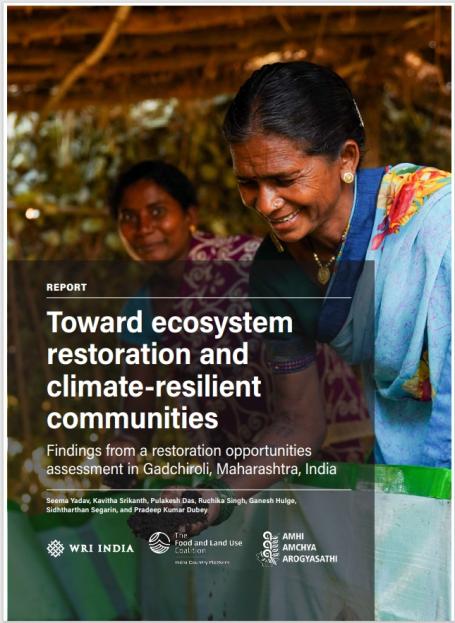
Ruchika: Strategies like sustainable agriculture are a must to heal our soils and reduce the environmental impact of how we grow our food. For decades there has been a bias in public investment which has led to misalignment of cropping patterns and visibly available resources for irrigation. For instance, wheat, rice and sugarcane are being grown in areas with low water availability. And policy makers in India do need to now plan for these interlinked but contradictory challenges.
The focus of Indian agriculture since the Green Revolution has been on food security. However, with risks associated with climate change, the focus needs to shift to nutritional security — healthy food. This would require repurposing some of the perverse incentives on agriculture and incentivizing farmers to grow food more sustainably. Opting for strategies that support crop diversification and better access to market can improve income for farmers, particularly tenant farmers and women farmers. And farmers understand the challenges, but they also need access to the right incentives and connections with the market to thrive and sustain.
So, when we think about strategies, it’s about building awareness about good agricultural practices in the production system that disincentivizes overuse of chemical fertilizers, incentivizes farmers to diversify crops and improves market access. We need an integrated strategy which must consider the trade-offs that may arise from deploying different policy measures. As an example, solarization of pump sets should not lead to depletion of groundwater and there needs to be an emphasis on incentivizing farmers to not over-irrigate. When we are designing some of these strategies for sustainable agriculture, we need to think in terms of the inputs that are provided, incentives that farmers have and the best practices they can access. All this needs to be thought through together for transforming our agricultural systems.
Aditi: Moving past production and looking at supply chain challenges, what are the drivers and implications of food loss and waste, and how can these be mitigated?
Ruchika: There are huge implications of food getting lost or wasted across the supply chain. If I just talk from a climate perspective, if food loss and waste was its own country, it would be the third largest emitter of greenhouse gases.
When we talk about food being lost or wasted, it is due to several reasons — postharvest, farmgate, near farm, wholesale, retail, going all the way to consumer level. And there are different drivers of loss or waste. For instance, at the farm gate there may be inadequate storage harvest infrastructure and the kind of harvesting, sorting or grading practices that farmers deploy may lead to reduced spoilage. There are several issues at the market level in terms of poor infrastructure, poor supply, demand forecasting and planning, price volatility — because of which sometimes food is wasted —, suboptimal packaging and storage.
At the consumption level, all of us as consumers sometimes don't pay adequate attention to wastage. There is a lack of awareness and existing norms and attitudes are a challenge as people don't consider the associated risks. And when we are talking about drivers, there are really a lot of structural issues that also need to be considered, right? So that we can really build that food supply chain which would require innovations, access to financing, the right policies and regulation, and climatic conditions as well.
Aditi: How can sustainable food systems help build the socioeconomic and climate resilience of forest and farm-based communities?
Ruchika: Sustainable food systems can make a huge difference in building resilience of local communities and enhancing their livelihoods. We need to unpack, however, what we mean by local communities. India has different castes, classes and genders. When we are thinking about enhancing livelihoods, we need to think about some of these social dynamics as well. Who has access to land, for instance? When we talk about sustainable agriculture incentives, farmers may be getting it, but which farmers? What about tenant farmers, women landholders or women who don't have land titles? So, you know, given that India has a rising population, there's rapid economic growth and environmental vulnerability, there are several challenges.
When we're thinking about enhancing livelihoods of vulnerable castes, women, landless or tenant farmers, the food systems can play a role. We need to think about enhancing livelihoods throughout the food system. Overall, if I talk about the land sector, it has one third of the mitigation potential and can support in building a thriving land-based restoration economy. But for this, we really need to look at the dependence of people on land and forests.
Beyond the Land: How Landscape Restoration is Transforming Lives
Read how the revitalization of Sidhi's landscape has led to a revived the aspirations of Sidhi's people.
This vision for sustainable food systems could include designing strategies that reduce distress migration of people from rural areas for jobs. This requires strengthening, on-farm and off-farm livelihoods. This can be done by, say, seeing if there is a focus on processing of certain crops and commodities at the farm gate. Or techniques and innovations that can improve shelf life of a perishable commodity through solar drying or cooling. Now, these entail different kinds of jobs that can be propagated, right?
So, when we think about not just taking the produce to the market but what we are doing in terms of processing to increase shelf-life, there is a huge potential. And a lot of these jobs could be for women, local youth and landless laborers, if we can sort of support the right capacity building and skills training.
Decision makers in India really need to start thinking systematically about how food and land use systems can help us protect our natural environment, provide access to nutritious, affordable food, while strengthening resilience and enhancing prosperity. We really need to think about circular food systems and creating an enabling ecosystem that can support local businesses, farmer producer companies and local innovators across the food supply chain. By enabling access to capital, capacities and incentives these restoration businesses or businesses that help reduce food loss or waste, can be strengthened. All of this will help in supporting and enhancing livelihoods and jobs and spurring the larger land-based restoration economy.
Learn more about our Food, Land and Water Program here.